About
I work where human experience meets healthcare systems.
I'm Serena Cox — an NMC-registered midwife, healthcare strategist and PhD-level qualitative researcher specialising in maternity experience, patient safety, service improvement and organisational learning.
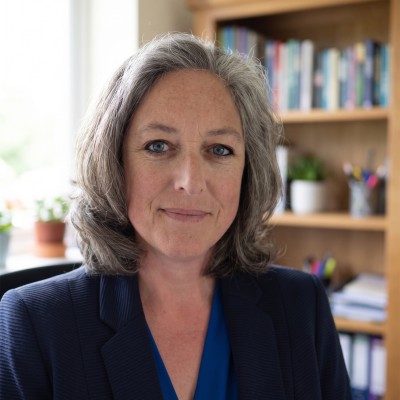
My perspective
Across more than 20 years in the NHS, I've seen the same problem from different positions: at the bedside during emergencies, in safety and governance teams reviewing risk, in senior leadership listening to women and families, and in research exploring what people seek when formal care hasn't met their needs.
That breadth shapes how I work. I don't treat patient experience as a soft measure sitting beside the serious work of safety. The way people experience communication, consent, escalation, continuity and response often tells us how reliably a system is functioning — revealing emerging harm, explaining why an apparently sound pathway fails in practice, and showing whether organisational learning is visible beyond a report.
I also know that insight alone changes very little. Organisations need credible governance, clear ownership, workable pathways, staff capability and measures that show whether improvement has actually happened. My work connects those elements.
Experience
Most recently I was Matron for Maternity Patient Experience and Engagement at Nottingham University Hospitals NHS Trust, holding strategic responsibility for maternity experience and engagement, senior oversight of complaints and PALS, and the governance processes that translate experience into improvement — working alongside the Trust's Independent Maternity Review response.
I designed and led the expansion of a specialist Birth Conversation and Birth Planning Service, and developed senior perinatal family liaison roles within the Trust's implementation of PSIRF. Earlier quality, risk and safety work included a system-wide maternity guideline gap analysis, thematic review of thousands of low- and no-harm incidents, and complex regulatory evidence gathering.
My clinical career includes a decade as a senior labour ward midwife across high-acuity, elective and outpatient maternity care.
Research and qualifications
I completed a PhD in Midwifery at the University of Nottingham in 2023. My thesis — Participating in birth trauma Facebook groups: a hermeneutic phenomenology study of women's experiences of online peer support following a traumatic birth — examined why women turn to informal support communities, what they find there, and what formal services can learn.
Training and certifications
- Diploma in Midwifery with Distinction — University of Nottingham, 2007
- BSocSc (Hons) Social Anthropology — University of Manchester, 2001
- Quality, Service Improvement and Redesign Practitioner — NHS England, 2024
- Mediation Practitioners Certificate, 2023
- Level 2 Counselling Skills, 2023
- Level 2 Motivational Interviewing, 2023
- Recognising and managing conflict between families and health professionals, 2024
Wider contribution
I've served as a Midlands Clinical Senate Assembly Member and on NIHR strategy, engagement and governance boards. In 2016 I was jointly awarded the Royal College of Midwives Annual Midwifery Award for Partnership Working.
What I bring to a project
- Clinical credibility and an understanding of real healthcare work
- Senior knowledge of NHS governance, regulation and organisational pressures
- Deep maternity and birth-trauma expertise
- Skill in qualitative research and the interpretation of complex human accounts
- Experience converting patient insight into services, governance and measurable improvement
- A trauma-informed, restorative and appropriately challenging approach
- The ability to communicate across families, clinicians, executives, researchers and technology teams
Professional note
I remain an NMC-registered midwife and work within my professional scope and standards. Consultancy recommendations are independent and proportionate to the agreed evidence and remit.